

Tricky things, cover version albums. They seldom improve on the original recordings and yet they often give familiar material an entirely new spin, reminding us exactly why we loved the songs so much in the first place. The Ace label are old hands at this, having compiled countless such collections over the years, each one put together with loving care and meticulous attention to detail.
Hurdy Gurdy Songs is described in the release blurb as “A kaleidoscopic trip into the craft of one of the most covered and influential songwriters of the 60s. Features eclectic readings of hits and deep cuts, including some never recorded by Donovan himself.” That’s a fair description of what’s on offer here, with the track listing running the musical gamut from the sublime (Deep Purple) to the somewhat ridiculous (Eartha Kitt) and all stops in between. If nothing else, it serves to demonstrate just how good the source material is, allowing itself to be moulded into virtually any style and genre without losing the inherent magic.
Donovan is well overdue for a collection like this. His material has been covered countless times (with varying degrees of success) since he first arrived on the pop scene in 1965. These 24 songs are drawn from his most prolific period 1965-71, when he was writing and recording some of the most captivating and original psych/pop music of his generation. This CD is the perfect companion to those timeless original recordings.
Track Listing:

1. Museum - Herman's Hermits (1967)
Donovan and the Hermits were part of the Mickie
Most production stable, so it was no surprise when Herman was gifted one of
Don’s songs to record. The lyrics of “Museum” were probably a little
weird for the Hermits’ teenage demographic, however, and while the single
limped into the lower reaches of the US top 40, it sank without trace in
Britain where it became their first 45 which failed to chart. It’s a
great record though with an impressive big band arrangement and became the
opening track of Herman’s October 1967 Blaze album.
The song was also covered in 1967 by Beverley
Kutner (later Beverley Martyn) and Noel Harrison.
Due to the well-documented legal wrangles which
threw his UK releases into chaos, Donovan’s original version of “Museum” didn’t
appear in Britain until the CD era when the Mellow Yellow album was
belatedly released.

2. Superlungs - Terry Reid (1969)
The one thing almost everyone knows about Terry
Reid is that he was Jimmy Page’s first choice as vocalist for Led
Zeppelin. He turned LZ down and recommended Robert Plant instead, which
turned out rather well for all concerned, except Terry, perhaps.
It goes without saying therefore that he is a
remarkable singer with a tremendous voice and, had the cards fallen
differently, he might have been a huge star instead of just a respected
footnote in rock history. Reid makes this song his own and delivers what
is surely the definitive version, aided by a typically robust production from
Mickie Most. Lyrically the song sails very close to the wind, extoling
the virtues of dope smoking 14-year-old schoolgirls but, hey, this was 1969,
after all.
Although it appears here as simply “Superlungs” the song started life as “Superlungs My Supergirl” on Reid’s self-titled second album (US title Move Over… For Terry Reid). Donovan first released it officially on his 1969 Barabajagal album and a brace of earlier outtake versions also appeared as bonus tracks on the Sunshine Superman and Mellow Yellow CDs.

3. Sunny Goodge Street - Tom Northcott (1967)
Tom Northcott is a Canadian folk-rock singer who
enjoyed brief success in his own country before dropping out of music in the
early 70s for a career in politics and law.
Possibly anticipating problems gaining North
American airplay, Northcott’s recording of “Sunny Goodge Street” replaced the
line “violent hash-smoker” with the more anodyne “fearless believer”.
Nevertheless, with the venerated Leon Russell and Lenny Waronker at the
controls, this is a great-sounding record with a lush production and a complex
arrangement.
Northcott’s single made the Canadian singles
charts, peaking at #20, but failed to gain traction in the US where it stalled
at #123.

4. The Pebble and the Man - Bridget St John (1971)
There has long been confusion about the title of
this song. It first appeared on the 1968 LP Donovan In Concert as
“The Pebble and the Man” with Don’s spoken introduction: “Here's a pretty
little song that I don't know what it's called quite yet”. It next
appeared as “Happiness Runs” on Mary Hopkin’s 1969 Post Card
album. Donovan also released a studio version with that title on his Barabajagal
LP the same year.
So, it was all a little confusing when, in 1971, the
song turned up as “The Pebble and the Man” once again on Bridget St John’s
second album Songs For The Gentle Man. Produced by Ron Geeson,
better known for his work with Pink Floyd, this version really brings out the
melody and, whatever the title, few could deny the charms of this delightful,
childlike ditty.

5. Sunshine Superman - The Standells (1967)
The Standells are probably best known for their
1965 garage band classic “Dirty Water,” found on virtually every Nuggets-style
compilation. Their version of “Sunshine Superman” is more restrained and
remarkably similar to the Donovan original in tempo and performance, leaving
only a few rough edges as a nod to their garage roots. It appeared on
their third album The Hot Ones! released in January 1967 alongside
covers of recent hits by the Troggs, Monkees, Kinks, Beatles, Lovin’ Spoonful,
Rolling Stones etc.
Fun fact: In 1964 Gary Leeds was briefly a member
of the Standells. But by the time they recorded this song he had changed his
name to Gary Walker and was enjoying huge success in Britain as drummer with
the Walker Brothers.
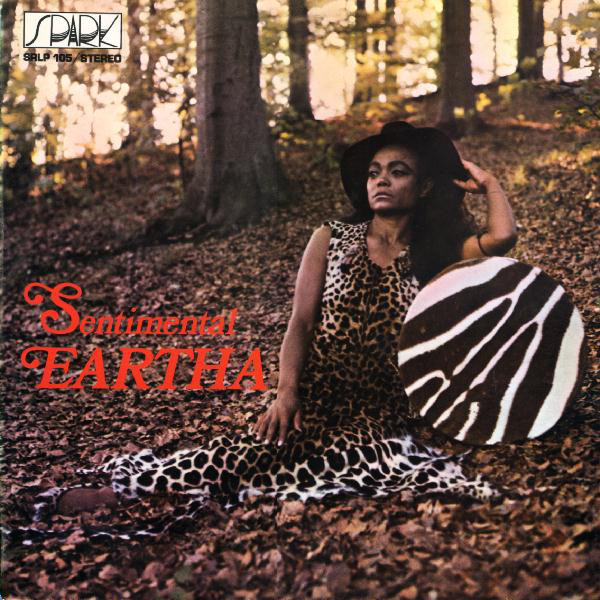
6. Hurdy Gurdy Man - Eartha Kitt (1970)
Those of a certain age will remember Eartha Kitt
for her mid-50s hits such as “Just An Old Fashioned Girl” delivered in that
tremulous, oh-so-sexy voice. A decade later she appeared as Catwoman in
the Batman TV series and more recently provided distinctive voiceovers
for several Disney animations.
With an eclectic CV like that it really wasn’t too
much of a stretch to imagine Eartha tackling one of Donovan’s pop psych
gems. Sure, it’s a bizarre version but the band are well up to the job,
and she delivers an unforgettable vocal performance. And if you thought
it was a one-off, take a listen to Ms Kitt’s 1970 album Sentimental Eartha
where, in addition to “Hurdy Gurdy Man”, she also covered Donovan’s “Wear Your
Love Like Heaven” and “Catch the Wind” with equal flamboyance.

7. Young Girl Blues - Marianne Faithfull (1967)
One of Donovan’s most personal songs, “Young Girl
Blues” was split between the delayed UK hybrid Sunshine Superman LP and
the US Mellow Yellow album. Almost before Don’s version was in the
stores, however, both Julie Felix and Marianne Faithfull had covered the song -
Julie for her Flowers album (where it was renamed “Saturday Night”) and
Marianne on Love In A Mist.
Both girls recorded several Donovan songs in the
60s, so it was no surprise they jumped on this one with its sensitive narrative
delivered directly from a female point of view. While Donovan wrote the
song in the third person, Marianne and Julie sang it in first person, giving
the lyrics an sometimes uncomfortable intimacy. Of the two versions,
Marianne’s won out with its understated string arrangement, acoustic guitar and
a delightfully dreamy vocal.
Her Love In A Mist album featured no fewer
than three Donovan songs. Alongside “Young Girl Blues” were “In The Night
Time” and “Good Guy” which were retitled covers of “Hampstead Incident” and
“Bert’s Blues” respectively. It would be Marianne’s last album for a
decade. When she returned, her image had changed, and her voice had become
decidedly huskier.

8. Poor Cow - Noel Harrison (1969)
Noel Harrison, the son of My Fair Lady actor
Rex Harrison, dabbled in both music and acting, recording at least six albums
during the 60s. He covered “Poor Cow” for 1969’s The Great Electric
Experiment Is Over alongside songs by Dylan, Joni Mitchell, Buffy
Sainte-Marie, Fred Neil and others. Harrison’s received pronunciation
makes for an unusual vocal performance, but it works fine, aided by a solid
arrangement and an array of big name LA session players.
“Windmills Of Your Mind” from the film The
Thomas Crown Affair was Harrison’s only major hit, yet he was clearly
preoccupied with Donovan, as the B-side of that single was the self-penned
“Leitch on the Beach”.
"Poor Cow” was originally written as “Poor
Love” for an aborted Lord of the Rings project. The song was
re-structured with slightly different lyrics for the soundtrack of the 1967 Ken
Loach movie Poor Cow. A different version then surfaced as the
B-side of Donovan’s “Jennifer Juniper” single. A live version from
November 1967 was included on the Donovan In Concert album, released in
August 1968.

9. Celeste - Paul Jones (1969)
Original Manfred Mann vocalist Paul Jones quit the
group in July 1966 to pursue a solo music and acting career. His third UK
solo LP (or his fourth in the US, where the Privilege EP was padded out
to album length) Come Into My Music Box contained an ill-matched
assortment of covers by The Band, Foundations, Marvin Gaye, Mama Cass and
Procol Harum.
“Celeste” is a gorgeous tune by any measure and
Jones makes a decent job of it, aided by a lavish string arrangement from
long-time Donovan collaborator John Cameron, who worked on the original Sunshine
Superman album version.
It was a case of: close, but no cigar for Paul
Jones.

10. Season of The Witch - Lou Rawls (1969)
This is possibly Donovan’s most covered song with
notable recordings by Dr. John, Al Kooper & Stephen Stills, Julie Driscoll
with Brian Auger & the Trinity, Vanilla Fudge and a dozen more. The
languid A7 to D7 chord sequence provides a perfect launchpad for improvisation
in almost any style, including the laidback soul funk of Lou Rawls.
Lou’s version appeared on his 1969 Capitol records
album The Way It Was, The Way It Is with a typically powerful David
Axelrod production.

11. Translove Airways (Fat Angel) - Big Jim Sullivan (1967)
Thanks to the Beatles, Donovan and others, sitars
became almost de rigueur in mid-60s pop/psych (witness the front cover
of this very CD!) Session guitarist extraordinaire Big Jim Sullivan, a
veteran of countless chart hits (plus at least three Donovan albums) jumped on
the bandwagon with his 1967 solo LP Sitar A Go Go (aka Sitar Beat).
With generic tracks such as “Flower Power”, “The
Sitar and the Rose” and the almost inevitable “A Whiter Shade of Pale” the
album bordered on kitsch lounge music at times, but with two Donovan covers
(“Sunshine Superman” was also featured) and a brace of Beatles’ numbers it’s
now a sought-after collector’s item.
You’d never know it, but this delightfully funky
instrumental is a cover of “The Fat Angel”, yet another Donovan song which
appeared on the US Sunshine Superman album but was unreleased in the UK
until the CD era.

12. You Just Gotta Know My Mind - Dana Gillespie (1968)
This superb version of a still-unreleased Donovan
tune is almost worth the price of admission alone. The song dates from
his early Denmark Street days and had already been covered by US singer Karen
Verros (1965) and Swedish band Steampacket II (1966) before Dana Gillespie gave
us what is surely the definitive recording.
All versions received the same stripped down,
garage band treatment, and if you didn’t know, you’d never guess it was a
Donovan song. It’s thought that an uncredited Jimmy Page and John Paul
Jones played on the Dana Gillespie session, making the record hugely
collectable today. It appeared on her US album Foolish Seasons and
was also issued as a UK Decca single.
Fun fact: Australian indie band the Hummingbirds
recorded a retro version of “You Just Gotta Know My Mind” in 1992 which even
featured a picture of Donovan on the CD single sleeve.

13. Oh Gosh - Sandie Shaw (1969)
Sandie Shaw’s 1969 album Reviewing The Situation
was clearly an attempt to throw off her lightweight pop image and reposition
her as a serious artist. It featured some unusual reinterpretations of
songs by the Beatles, Stones, Bee Gees, Lovin’ Spoonful etc. It also
included “Your Time Is Gonna Come” which is thought to be the first-ever Led
Zeppelin cover version.
Donovan could usually get away with recording a
seemingly airy-fairy song such as “Oh Gosh”, but others needed to tread more
carefully. Sandie’s version walks a fine line between charming and
cringingly twee and often ends up on the wrong side.

14. There Is A Mountain – Dandy (1967)
Released in November 1967, only weeks after
Donovan’s hit single, Dandy Livingstone’s reggae take on “There Is a Mountain”
remained faithful to the original, with just a couple of modifications.
On the line “then there is no mountain, then there is” Dandy changed the
scansion, making it shorter, which sounds hurried and very wrong on first
hearing. He also doesn’t seem too sure of the lyrics in places.
Donovan’s original had a definite reggae feel to
start with, so Dandy didn’t have to work too hard with his somewhat lightweight
version.

15. Try And Catch the Wind - The Gosdin Brothers (1968)
Changing the tempo from the original 3/4 waltz time
to straight 4/4 and giving it a country rock treatment transformed “Catch the
Wind” into one of the strongest tracks here.
Rex and Vern Gosdin are probably best known for
their work with Gene Clark but this track, with its extended title, appeared on
their 1968 album Sounds Of Goodbye. Vern Gosdin went on to record
solo under his own name after this.

16. Skip-A-Long Sam - The Sugar Shoppe (1968)
Toronto quartet The Sugar Shoppe were pitched as
Canada’s answer to the Mamas & the Papas. They released just one
album and while the material may have been lightweight, the backing musicians,
including members of the Wrecking Crew - Hal Blaine, Carol Kaye, Larry
Knechtel, Earl Palmer etc., - certainly were not.
“Skip-A-Long Sam” was the opening track on the LP,
and it was also released as a single, reaching #73 in the Canadian charts.

17. Snakeskin - Julie Felix (1971)
American folk singer Julie Felix was resident in
the UK from 1964 to her death in 2020. During the late 60s she
hosted her own highly regarded BBC TV series which included elite musical
guests such as Jimmy Page, the Incredible String Band, Leonard Cohen and
Fleetwood Mac. Naturally, Julie drifted into Donovan’s orbit, and she
recorded at least seven of his songs across her albums.
The hard rocking “Snakeskin” was originally
recorded by Donovan in 1968 but remained unreleased by him until 2005 when it
emerged as a bonus track on the Barabajagal CD reissue. The song
was gifted to Julie Felix and in January 1971 it appeared in the UK as a
non-album single on Mickie Most’s RAK label.

18. Hey Gyp (Dig The Slowness) - Keith Shields (1967)
Although authorship is credited to Donovan, this
rhythmic two chord acoustic rocker is probably based on Memphis Minnie and
Kansas Joe McCoy’s 1930 recording of “Can I Do It For You” with the title
changed in tribute to Don’s buddy Gypsy Dave. Eric Burdon and the Animals
quickly picked it up for their 1966 US album Animalism and other cover
versions followed by the Truth, the Soul Survivors and this one by Keith
Shields.
Shields who, serendipitously or otherwise, really
did hail from North Shields on Tyneside, appears to have released just three
obscure singles for Decca before disappearing from the pop scene. All of
them were produced by ex-Animals guitarist and fellow Tynesider Hilton
Valentine, including a vigorous freakbeat version of “Hey Gyp”. So rare
and highly prized has this single become that bootleg copies with fake Decca
labels have been circulating among collectors.
As often happened in the 60s, the credit on the original Decca single showed the composer as "Donovan, Leitch" as if it were two people (see photo). This was a relatively common error back then.

19. Three King Fishers - Gábor Szabó (1968)
Hungarian gypsy jazz guitarist Gábor Szabó was no
stranger to rock and pop. Every track except two on his 1968 LP Bacchanal
was an interpretation of a recent pop hit or movie soundtrack theme.
Donovan is represented twice with instrumental cover versions of “Sunshine
Superman” and “Three King Fishers”, the latter a wonderfully atmospheric modal
piece with a strong Indian flavour. A third Donovan cover - “Ferris
Wheel” - appeared on Szabó’s next album Dreams, also from 1968.
All three songs originated on the US incarnation of the Sunshine Superman
album.

20. Hampstead Incident – Bojoura (1968)
A contender for the most obscure recording here,
Bojoura’s version of “Hampstead Incident” seems to have been released only in
her native Netherlands on her 1968 debut album Night Flight Night Sight
(a UK CD later appeared in 2010). It’s a decent arrangement, if a little
overwrought vocally and adds little or nothing to a similar 1967 recording by
Marianne Faithfull (which was re-titled “In The Night Time”).
Far more interesting is Bojoura’s connection to the
Dutch band Focus. She played and recorded with
vocalist / flautist / keyboardist Thijs van Leer and later married Hans Cleuver who
was the group’s drummer in 1969-70.

21. Wear Your Love Like Heaven - Peggy Lipton (1970)
This is a strange one. Peggy Lipton was
primarily an actress who also recorded one album and a handful of singles
between 1968-70. She appeared in ABC TV dramas Twin Peaks and The
Mod Squad and for 15 years was married to Quincy Jones.
Starting with a rollicking Leon Russell style piano
grab from “Sunshine Superman” before dramatically shifting gear into the slower
tempo of “Wear Your Love Like Heaven,” this can only be described as sunshine
pop, bordering on easy listening.
Produced by Lou Adler (and released on his Ode
label) this stand-alone single probably featured the same impressive line-up of
musicians as Peggy’s 1968 self-titled album, including Jim Gordon (drums), Jim
Horn (sax), Larry Knechtel (keyboards) and Hal Blaine (musical director).

22. Jennifer Juniper - The Sandpipers (1968)
Another generous helping of unashamed easy
listening, this time courtesy of the “Guantanamera” hitmakers, The
Sandpipers. This is probably not how Donovan envisaged his February 1968
hit single would end up and, even allowing for the recent revival of (ironic)
interest in lounge music, sitting through this syrupy version is like wading
through aural quicksand.
It originally appeared on the Sandpipers’ 1968 LP Softly,
alongside similar MOR-tastic treatments of songs by Leonard Cohen, Gordon
Lightfoot, Tim Hardin and the Beatles.

23. Legend of A Girl Child Linda - Joan Baez with Judy Collins & Mimi Fariña (1967)
This is taken from a 1967
compilation LP Save The Children on the Women Strike For Peace
label. WSP was founded in 1961 to protest US and Soviet atmospheric
nuclear tests – their motto: “End the Arms Race – Not the Human Race.”
Joan Baez was no stranger to the
anti-war movement of course and in May 1965 she was seen at a Campaign for
Nuclear Disarmament (CND) march in London together with Donovan, Tom Paxton and
Vanessa Redgrave. A young pre-fame Marc Bolan (then still known as Mark
Feld) was also present and managed to insert himself into the photos of the event.
Individually and together Joan,
Judy and Mimi had already recorded a number of Donovan songs (or performed them
in concert) with excellent results. However, with three such pure (and,
at times, strident) voices fighting it out, this four-minute song with its
succession of identical verses palls somewhat before the end.
Providing accompaniment here is
Bruce Langhorne, the respected Greenwich Village guitarist who played on
virtually every Bob Dylan album from 1963-65.

24. Lalena - Deep Purple (1969)
Before they fully committed to
heavy metal in 1970 Deep Purple’s early records were littered with interesting
covers of sometimes unlikely pop songs by the likes of Neil Diamond, Joe South
and the Beatles. For their self-titled third album released in June 1969
they tackled “Lalena” a US-only Donovan single which was then just a few months
old.
It would prove to be virtually the
last cover version Purple ever recorded and within weeks of the album’s release
vocalist Rod Evans and bassist Nick Simper were replaced by Ian Gillan and
Roger Glover and an entirely new chapter had begun.
But this a masterful version of a
great song with Evans’ operatic vocals and Jon Lord’s Hammond organ well to the
fore and it makes a fitting closing track for this collection.
The original 1969 sleeve notes to the Deep
Purple album said this: “Donovan’s song done how we thought Donovan might
like to have heard it. The only double
tracking on this cut is the guitar passage at the end. The slightly ‘jazzy’ feel to the organ is a
bow in the direction of Donovan’s ‘Mellow Yellow.’”


.jpg)

