Saturday, 10 July 2021

High Times And Green Grass: Stones In The Park


by Stuart Penney

This week marks the 52nd anniversary of the Rolling Stones’ historic free concert in Hyde Park.  Our man in the crushed velvet loon pants and grubby Afghan coat was on the spot in 1969 to witness it all.  Stuart Penney reports on the big day. 

The summer of 1969 was a busy time for concertgoers.  Supergroup Blind Faith played their much vaunted and highly anticipated debut (and, as it turned out, only) UK show in Hyde Park in early June and then barely a month later it was the turn of the Rolling Stones.  These early concerts took place on the banks of the Serpentine lake in a natural amphitheatre known as The Cockpit (actually a disused gravel pit dating back to the 17th century) and because the shows were free to all, the location required no fences and presented few problems with security.


The concerts were the brainchild of Blackhill Enterprises, the rock management company founded by Peter Jenner, Andrew King and members of Pink Floyd.  Among Blackhill’s clients were Marc Bolan, Roy Harper and the Edgar Broughton Band, so it was no surprise to see these artists regularly booked for the Hyde Park shows.

Around a dozen free concerts took place between 1968-71, averaging three a year.  The first, on June 29, 1968, featured Pink Floyd, Jethro Tull, Tyrannosaurus Rex and Roy Harper.  A month later came Traffic, The Nice, Pretty Things, The Action and Junior’s Eyes.  In August it was the turn of Fleetwood Mac, Family, Fairport Convention, Eclection and Ten Years After and bringing the summer of 1968 to a close in September were The Move, Strawbs, Roy Harper, The Action and Clouds.  These early shows were comparatively small, laidback affairs with crowds not exceeding 15,000.  All this would change the following year as the concerts dramatically increased in scale and notoriety.

The first concert of 1969 attracted a crowd of 150,000 on June 7 to see Blind Faith supported by the Third Ear Band, Edgar Broughton Band, Richie Havens and, making an impromptu appearance, Donovan.  But this huge turn-out was a mere bagatelle compared to the next event 28 days later when a reported half million came to see the Rolling Stones. 


On Friday July 4, the day before the concert, a special “Stones In The Park” souvenir edition of the London newspaper the Evening Standard appeared with a colour front cover, which was most unusual for the time. It showed the band sitting on the floor of a rehearsal room (possibly Apple studios) surrounded by their Hiwatt amps and assorted instruments. As a lifelong guitar obsessive, I was thrilled to see Mick Taylor with a Gibson SG Standard complete with Bigsby vibrato. Bill had a seldom-seen Vox Astro IV violin bass and, best of all, Keith was pictured with a rare and beautiful Gibson Flying V.  With fewer than 100 original examples made in 1958/59 the Flying V was an unfeasibly scarce and desirable instrument, even in 1969.  According to Bill Wyman this very guitar had originally been owned by none other than bluesman Albert King.


The Hyde Park show was the only time Keith’s “V” was seen onstage and in 1971 it was one of several guitars stolen from Nellcôte, his villa in the south of France, during the Exile On Main Street sessions (see footnote).  I treasured that copy of the Evening Standard for decades and, dog-eared and torn, it survived several house moves before eventually going the way of so many other items of ephemera.

After catching the 7:15am train from Sheffield to London St. Pancras, my girlfriend Carol and I arrived at the park around midday to find thousands already occupying their one square yard of grass (that’s 0.836127 square metres, for metric fans).  Many had camped out overnight in deckchairs and sleeping bags and some were still dozing.  Campfires and related outdoor survival paraphernalia were much in evidence and the air hung heavy with the unmistakable aroma of jazz Woodbines.  We eventually secured a spot to the left of the stage with limited visibility. 


A month earlier at the Blind Faith concert (which we also attended) the stage had been a relatively small, simple affair without any kind of backdrop.  This afforded fans a clear view past the band and the Marshall stacks and out across the Serpentine to the distant 33-storey Hyde Park Barracks tower, then still under construction.  I always thought this seemed a little low budget for such a major (and majorly-hyped) group.  

But with money seemingly no object for the Stones, their stage was many times larger than the one used by Clapton & Co and it was adorned with palm trees and a painted backdrop which included a giant blow-up of the Beggars Banquet inside sleeve, giving a much better overall atmosphere.  However, the visual effect was spoiled somewhat by dozens of assorted liggers, hangers-on, Hells Angels, photographers, friends, wives and lovers spilling onto the stage from the scaffolding towers on both sides.  All the Hyde Park concerts and many other large events of the era, including the Isle of Wight festivals, used the same WEM (Watkins Electric Music) PA systems with their familiar black columns and distinctive red logo.

It was a hot, sticky day and with the concept of bottled water still a marketing man’s distant (wet) dream we sweltered through the support acts which included King Crimson, Family, Battered Ornaments, Third Ear Band and Alexis Korner’s New Church.  Despite their impending fame King Crimson were still an unknown quantity to most of the crowd at that point.  There was already quite a buzz about them in the music papers but their debut album In The Court Of The Crimson King would not be in the shops until October 1969, three months hence.  Unsurprisingly, this was the original Crimson line-up comprising Robert Fripp, Greg Lake, Ian McDonald, Michael Giles and lyricist Pete Sinfield.  MC Sam Cutler introduced them declaring, with devastating prescience, “this new band is going to go a long way”.  The KC setlist was “21st Century Schizoid Man”, “The Court of the Crimson King”, “Get Thy Bearings” (a Donovan cover!), “Epitaph”, “Mantra”, “Travel Weary Capricorn” and “Mars: The Bringer of War”.

And then there were the bikers.  Despite being totally at odds with the prevailing peace and love vibe, it had become fashionable in America at that time to hire Hells Angels members to act as security at outdoor shows to protect the stage and equipment.  The Grateful Dead especially liked to identify with the Angels’ outlaw image so we should probably blame them for starting this dubious trend.  It was a frankly naïve and reckless affectation which reached a tragic and murderous nadir at the Stones’ Altamont Free Concert in December 1969 with the death of an audience member at the hands of the Angels.

Mercifully, the idea didn’t translate too well on our side of the Atlantic and, for all their stormtrooper swagger, German stahlhelm and brazenly displayed swastikas and other Nazi insignia (unthinkable today), the British Hells Angels on duty in Hyde Park were a hopeless bunch and a pale imitation of their thuggish American counterparts.  Positioned in the press enclosure immediately in front of the stage, this unattractive, sallow-faced crew glowered menacingly at everyone around them.  But despite their macho bluster and surly demeanor, these weekend greasers appeared largely clueless as to why they were there.  It was later confirmed that there were only twelve arrests on the day and a subsequent police report opined that the 50 Angels hired by the Stones proved "totally ineffective".  We should probably chalk this up as one of Mick’s (for it was surely his idea) least successful brainstorms. 

The Battered Ornaments were awarded the coveted second support slot immediately before the Stones, probably because they were also managed by Blackhill Enterprises.  Their founder and Cream lyricist Pete Brown had suffered the ignominy of being ousted from his own band just days before the concert and they performed at Hyde Park without him, requiring guitarist Chris Spedding to take over on vocals.  As Spedding later admitted, “We fired Pete Brown because we didn’t like his singing.  It was unfortunate because none of us could sing better than him.  There were no good singers in the band”.  Undeterred, Brown resurfaced with his new band Piblokto! later in 1969 and went on to record a couple of albums for the Harvest label. 

The Battered Ornaments used an old army field ambulance as their tour bus at the time and much to Spedding’s annoyance this was requisitioned by the Stones to use as a decoy vehicle to smuggle Jagger & Co from their Park Lane hotel to the backstage area instead of their attention-grabbing limousines.  Perhaps because the vehicle was painted in military olive green many contemporary reports of the concert described the ambulance as an “armoured personnel carrier.”


The Stones hadn’t played publicly for over two years and the concert was intended to be the public unveiling of their new whiz kid guitar player Mick Taylor, fresh out of John Mayall’s Bluesbreakers.  He had been introduced to the press three weeks earlier at a June 13 Hyde Park photo call and the “Honky Tonk Women” single (recorded with Taylor on June 1) was rush-released in time for the free concert.  They rehearsed in the Beatles basement studio at Apple in Savile Row and put together a 14-song set, much of it drawn from Beggars Banquet and the yet to be released Let It Bleed, with a few singles and early album tracks thrown in.

Before the Stones took the stage MC and tour manager Sam Cutler made an impassioned plea asking people to come down from the trees they had climbed to secure a better vantage point.  Couched in the hippy jargon of the time, Sam’s announcement was along the lines of “Listen, people. There are many trees around the park and these trees have many branches.  Some of them are being damaged.  Please do not damage the trees. Trees have feelings too, people.” 


The Stones finally arrived onstage in the late afternoon to wild and prolonged applause.  Mick repeatedly called for quiet as, in a flat, emotionless monotone, he read the eulogy for Brian Jones who had died just two days earlier.  The poetry meant absolutely nothing to us (and probably most of the crowd, too) at the time but, as we later discovered, it was two stanzas of Percy Bysshe Shelley’s poem on John Keats’ death, “Adonaïs”.  As the eulogy ended the signal was given for roadies to release thousands of cabbage white butterflies from cardboard boxes on either side of the stage.  But instead of the moving visual tribute to Brian the Stones were presumably hoping for, the imprisoned insects had suffered in the summer heat and most of them fluttered dead or dying onto the stage.

Following the poetry reading the opening number was “I’m Yours And I’m Hers” a slide guitar cover of a Johnny Winter song from his April 1969 self-titled debut CBS album.  Never officially released by the Stones it was an unusual choice, especially since Winter’s original version was only a few weeks old at the time. The significance was probably lost on most of the audience but, as we later found out, the song was a favourite of Brian Jones.  From there it was straight into a ragged version of “Jumpin’ Jack Flash” which, although a little rough and ready, sounded just fine.


Four songs from Beggars Banquet were included in the set, along with two from Let It Bleed, an album which would not be released until the end of 1969.  The oldest song was “Down Home Girl” from their 1965 second LP Rolling Stones No. 2 (US title Rolling Stones, Now!).  Another surprise was “Loving Cup” which, although first recorded during the Let It Bleed sessions, didn’t see the light of day until a new, faster version appeared on Exile On Main Street two years hence. 

As the crowd drifted away at the end there was a stage announcement offering a copy of the single “Honky Tonk Women” (released just the day before) to anyone who volunteered to collect a bag of rubbish.  Back then a 7” single retailed at six shillings and eight pence (33p), which is the equivalent of £6 in 2021.  I was quite tempted by the offer of a free record but not tempted enough to get my hands dirty.  Besides, I fondly imagined I was too cool for that kind of thing.  Health and Safety would have a field day with something like that now considering the number of syringes and other delights you’d find in today’s concert garbage.  It was later estimated that 5,000 tons of rubbish were removed from the park, but that only £100 (equivalent to £1,700 in 2021) of damage was reported.  Funnily enough, most of that meagre destruction was to the trees Sam Cutler had seemed so concerned about.


New boy Mick Taylor acquitted himself amazingly well considering this was his first live outing with the Stones.  But overall the band sounded tentative and under-rehearsed, and Keith’s guitar was a little out of tune in places.  But none of that seemed to matter a jot at the time.  Music wasn’t freely available 24-7 like it is now and we were thrilled just to see the Stones (and see them for free, too). 

Keith alternated between that amazing Flying V and a more prosaic Gibson ES330, while Taylor swapped between his Gibson SG Standard and an original sunburst Les Paul, a guitar which is probably worth more than the price of a decent house today, even without the Stones’ provenance. Bill, meanwhile, unearthed his 1964 Framus 5/150 Star bass, which he nicknamed "The Humbug" because of the striped pattern in the wood. In a 1971 Rolling Stone interview Keith admitted "We played pretty bad until near the end, because we hadn't played for years.  Nobody minded because they just wanted to hear us play again."


Although it wasn’t a vintage performance, the 1969 Hyde Park concert was a genuine coming of age for the Stones.  It seemed like this was the point where they made the transition from a package tour singles group into a fully-fledged rock albums band.  While it wouldn’t become official for another six months or so, the Beatles were now finally out of the picture and the Stones were free to conquer America and become the biggest stadium rock band in the world. 


Later that evening The Who and Chuck Berry were double billed at the Royal Albert Hall just a short stroll across Hyde Park.  It was the closing night of the first season of the Pop Proms and Teddy Boys in their drape jackets and drainpipes turned up in force to pay homage to Chuck.  Bizarrely, the Teds abused the Who and front man Roger Daltrey reportedly received a cut to his head after objects were thrown at the band.  Over the years I’ve spoken to several people who attended both the Albert Hall event and the Stones concert too.  We seriously thought about going to this show, but it had been a long hot day and we bailed early, footsore and sunburned, to catch the 10:20pm train home to Sheffield.

In the weeks afterwards much was made of Jagger’s “man’s dress” and dog collar combo which he wore for the opening numbers.  The garment was made by designer Mr. Fish - apparently for Sammy Davis Jr - before it found its way to Mick.  The grown-ups weren’t impressed of course and parents across the land went into apoplexy at the sight of Jagger sashaying across the stage in such an outfit.  Mick removed the dress after the first few songs to reveal a violet-coloured vest (or singlet, as the Americans might call it) beneath.  David Bowie also famously wore a Mr. Fish dress on the cover of his 1970 third album The Man Who Sold The World.


Jagger and Bowie (and probably Marc Bolan too) were among the few able to carry off the androgynous rock star look with casual aplomb and this fed directly into the burgeoning glam scene of the early 70s.  Many other glam bandwagon jumpers (no names, no pack-drill) were not nearly so successful in this respect, making a mockery of the whole thing and coming across more like clodhopping bricklayers in make-up instead of fully-fledged members of the Peacock Revolution.

I think this was also the first time I realised how cool Keith looked.  He’d always seemed slightly nondescript in the early days of the Stones (at least until the drug busts of 1967), where he was overshadowed by Mick and Brian with their great haircuts.  But in Hyde Park Keith’s hair was longer and he really began to look the part.  I’ve always intensely disliked the lazy, overused cliche “elegantly wasted”, but it’s probably true to say his classic 70s image began to take root here.

View from the cheap seats. Photo by Carol Pinder

Using a cheap Kodak Instamatic camera, we captured just a solitary photograph from our vantage point on the day.  It’s not a great picture, admittedly, but 52 years later I think it’s worth reproducing here.  Mick can be seen onstage just above another camera being held aloft by someone in front of us.  Today that scene would be a veritable sea of iPhones recording the action to immediately upload to Facebook, Instagram or YouTube.  But in 1969 there was only one cheap camera as far as the eye could see (in the crowd, at least).  Not everything changes for the better, it seems. 

Carol and I went to just one more Hyde Park free concert after the Stones.  On July 18, 1970 we saw Pink Floyd previewing their Atom Heart Mother album almost three months before its October release.  This time the stage had moved over to the Park Lane side of Hyde Park and as we were living at Notting Hill Gate by then it took just a leisurely stroll along the Bayswater Road to witness the action.  Supporting Pink Floyd were the usual suspects: Roy Harper, Kevin Ayers, Edgar Broughton Band, Formerly Fat Harry and Lol Coxhill.  The Third Ear Band were also on the bill but, for reasons unknown, they didn’t appear.  It was an eventful and quite surreal day with a full choir and orchestra backing Floyd.  But that’s probably a tale for another day. 

Rolling Stones Set List:

Eulogy for Brian Jones

I'm Yours And I’m Hers

Jumpin Jack Flash

No Expectations 

Mercy, Mercy

Stray Cat Blues

I'm Free

Down Home Girl

Love in Vain

Loving Cup

Midnight Rambler

(I Can’t Get No) Satisfaction 

Honky Tonk Woman

Street Fighting Man

Sympathy for the Devil

Footnote:

Bill Wyman has stated that 11 guitars and some basses were stolen from Nellcôte in 1971.  Apart from the Gibson Flying V mentioned above, Keith’s other stolen instruments likely included a Gibson ES-355, 1959 Gibson Les Paul Custom, 1959 Gibson Les Paul Junior, Gibson Hummingbird acoustic, Epiphone Frontier acoustic and two Ampeg Dan Armstrong Plexiglass electrics.  A Fender Telecaster and a Gibson SG Standard belonging to Mick Taylor were also taken.

Some of the guitars which were stolen from Nellcôte including Keith’s Hyde Park Gibson Flying V and Mick Taylor’s Gibson SG
The Hyde Park concert featured on one of the Rolling Stones commemorative stamps issued by the Royal Mail in January 2022


Friday, 18 June 2021

Hurdy Gurdy Songs: Words & Music by Donovan 1965-1971 - CD Review


ACE CDTOP 1595

A CD review by Stuart Penney

Tricky things, cover version albums.  They seldom improve on the original recordings and yet they often give familiar material an entirely new spin, reminding us exactly why we loved the songs so much in the first place.  The Ace label are old hands at this, having compiled countless such collections over the years, each one put together with loving care and meticulous attention to detail.  

Hurdy Gurdy Songs is described in the release blurb as “A kaleidoscopic trip into the craft of one of the most covered and influential songwriters of the 60s.  Features eclectic readings of hits and deep cuts, including some never recorded by Donovan himself.”  That’s a fair description of what’s on offer here, with the track listing running the musical gamut from the sublime (Deep Purple) to the somewhat ridiculous (Eartha Kitt) and all stops in between.  If nothing else, it serves to demonstrate just how good the source material is, allowing itself to be moulded into virtually any style and genre without losing the inherent magic.  

Donovan is well overdue for a collection like this.  His material has been covered countless times (with varying degrees of success) since he first arrived on the pop scene in 1965.  These 24 songs are drawn from his most prolific period 1965-71, when he was writing and recording some of the most captivating and original psych/pop music of his generation.  This CD is the perfect companion to those timeless original recordings.  

Track Listing:


1. Museum - Herman's Hermits (1967)

Donovan and the Hermits were part of the Mickie Most production stable, so it was no surprise when Herman was gifted one of Don’s songs to record.  The lyrics of “Museum” were probably a little weird for the Hermits’ teenage demographic, however, and while the single limped into the lower reaches of the US top 40, it sank without trace in Britain where it became their first 45 which failed to chart.  It’s a great record though with an impressive big band arrangement and became the opening track of Herman’s October 1967 Blaze album.

The song was also covered in 1967 by Beverley Kutner (later Beverley Martyn) and Noel Harrison.  

Due to the well-documented legal wrangles which threw his UK releases into chaos, Donovan’s original version of “Museum” didn’t appear in Britain until the CD era when the Mellow Yellow album was belatedly released.


2. Superlungs - Terry Reid (1969)

The one thing almost everyone knows about Terry Reid is that he was Jimmy Page’s first choice as vocalist for Led Zeppelin.  He turned LZ down and recommended Robert Plant instead, which turned out rather well for all concerned, except Terry, perhaps.

It goes without saying therefore that he is a remarkable singer with a tremendous voice and, had the cards fallen differently, he might have been a huge star instead of just a respected footnote in rock history.  Reid makes this song his own and delivers what is surely the definitive version, aided by a typically robust production from Mickie Most.  Lyrically the song sails very close to the wind, extoling the virtues of dope smoking 14-year-old schoolgirls but, hey, this was 1969, after all.  

Although it appears here as simply “Superlungs” the song started life as “Superlungs My Supergirl” on Reid’s self-titled second album (US title Move Over… For Terry Reid).  Donovan first released it officially on his 1969 Barabajagal album and a brace of earlier outtake versions also appeared as bonus tracks on the Sunshine Superman and Mellow Yellow CDs.


3. Sunny Goodge Street - Tom Northcott (1967)

Tom Northcott is a Canadian folk-rock singer who enjoyed brief success in his own country before dropping out of music in the early 70s for a career in politics and law.  

Possibly anticipating problems gaining North American airplay, Northcott’s recording of “Sunny Goodge Street” replaced the line “violent hash-smoker” with the more anodyne “fearless believer”.  Nevertheless, with the venerated Leon Russell and Lenny Waronker at the controls, this is a great-sounding record with a lush production and a complex arrangement. 

Northcott’s single made the Canadian singles charts, peaking at #20, but failed to gain traction in the US where it stalled at #123.


4. The Pebble and the Man - Bridget St John (1971)

There has long been confusion about the title of this song.  It first appeared on the 1968 LP Donovan In Concert as “The Pebble and the Man” with Don’s spoken introduction: “Here's a pretty little song that I don't know what it's called quite yet”.  It next appeared as “Happiness Runs” on Mary Hopkin’s 1969 Post Card album.  Donovan also released a studio version with that title on his Barabajagal LP the same year. 

So, it was all a little confusing when, in 1971, the song turned up as “The Pebble and the Man” once again on Bridget St John’s second album Songs For The Gentle Man.  Produced by Ron Geeson, better known for his work with Pink Floyd, this version really brings out the melody and, whatever the title, few could deny the charms of this delightful, childlike ditty.


5. Sunshine Superman - The Standells (1967)

The Standells are probably best known for their 1965 garage band classic “Dirty Water,” found on virtually every Nuggets-style compilation.  Their version of “Sunshine Superman” is more restrained and remarkably similar to the Donovan original in tempo and performance, leaving only a few rough edges as a nod to their garage roots.  It appeared on their third album The Hot Ones! released in January 1967 alongside covers of recent hits by the Troggs, Monkees, Kinks, Beatles, Lovin’ Spoonful, Rolling Stones etc.

Fun fact: In 1964 Gary Leeds was briefly a member of the Standells. But by the time they recorded this song he had changed his name to Gary Walker and was enjoying huge success in Britain as drummer with the Walker Brothers.


6. Hurdy Gurdy Man - Eartha Kitt (1970)

Those of a certain age will remember Eartha Kitt for her mid-50s hits such as “Just An Old Fashioned Girl” delivered in that tremulous, oh-so-sexy voice.  A decade later she appeared as Catwoman in the Batman TV series and more recently provided distinctive voiceovers for several Disney animations.  

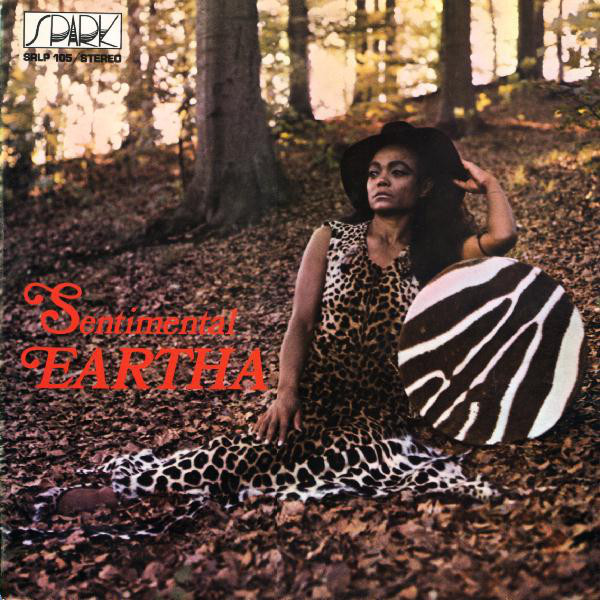
With an eclectic CV like that it really wasn’t too much of a stretch to imagine Eartha tackling one of Donovan’s pop psych gems.  Sure, it’s a bizarre version but the band are well up to the job, and she delivers an unforgettable vocal performance.  And if you thought it was a one-off, take a listen to Ms Kitt’s 1970 album Sentimental Eartha where, in addition to “Hurdy Gurdy Man”, she also covered Donovan’s “Wear Your Love Like Heaven” and “Catch the Wind” with equal flamboyance.


7. Young Girl Blues - Marianne Faithfull (1967)

One of Donovan’s most personal songs, “Young Girl Blues” was split between the delayed UK hybrid Sunshine Superman LP and the US Mellow Yellow album.  Almost before Don’s version was in the stores, however, both Julie Felix and Marianne Faithfull had covered the song - Julie for her Flowers album (where it was renamed “Saturday Night”) and Marianne on Love In A Mist. 

Both girls recorded several Donovan songs in the 60s, so it was no surprise they jumped on this one with its sensitive narrative delivered directly from a female point of view.  While Donovan wrote the song in the third person, Marianne and Julie sang it in first person, giving the lyrics an sometimes uncomfortable intimacy.  Of the two versions, Marianne’s won out with its understated string arrangement, acoustic guitar and a delightfully dreamy vocal.  

Her Love In A Mist album featured no fewer than three Donovan songs.  Alongside “Young Girl Blues” were “In The Night Time” and “Good Guy” which were retitled covers of “Hampstead Incident” and “Bert’s Blues” respectively.  It would be Marianne’s last album for a decade.  When she returned, her image had changed, and her voice had become decidedly huskier. 


8. Poor Cow - Noel Harrison (1969)

Noel Harrison, the son of My Fair Lady actor Rex Harrison, dabbled in both music and acting, recording at least six albums during the 60s.  He covered “Poor Cow” for 1969’s The Great Electric Experiment Is Over alongside songs by Dylan, Joni Mitchell, Buffy Sainte-Marie, Fred Neil and others.  Harrison’s received pronunciation makes for an unusual vocal performance, but it works fine, aided by a solid arrangement and an array of big name LA session players.  

“Windmills Of Your Mind” from the film The Thomas Crown Affair was Harrison’s only major hit, yet he was clearly preoccupied with Donovan, as the B-side of that single was the self-penned “Leitch on the Beach”.  

"Poor Cow” was originally written as “Poor Love” for an aborted Lord of the Rings project.  The song was re-structured with slightly different lyrics for the soundtrack of the 1967 Ken Loach movie Poor Cow.  A different version then surfaced as the B-side of Donovan’s “Jennifer Juniper” single.  A live version from November 1967 was included on the Donovan In Concert album, released in August 1968.


9. Celeste - Paul Jones (1969)

Original Manfred Mann vocalist Paul Jones quit the group in July 1966 to pursue a solo music and acting career.  His third UK solo LP (or his fourth in the US, where the Privilege EP was padded out to album length) Come Into My Music Box contained an ill-matched assortment of covers by The Band, Foundations, Marvin Gaye, Mama Cass and Procol Harum.  

“Celeste” is a gorgeous tune by any measure and Jones makes a decent job of it, aided by a lavish string arrangement from long-time Donovan collaborator John Cameron, who worked on the original Sunshine Superman album version. 

It was a case of: close, but no cigar for Paul Jones.


10. Season of The Witch - Lou Rawls (1969)

This is possibly Donovan’s most covered song with notable recordings by Dr. John, Al Kooper & Stephen Stills, Julie Driscoll with Brian Auger & the Trinity, Vanilla Fudge and a dozen more.  The languid A7 to D7 chord sequence provides a perfect launchpad for improvisation in almost any style, including the laidback soul funk of Lou Rawls.  

Lou’s version appeared on his 1969 Capitol records album The Way It Was, The Way It Is with a typically powerful David Axelrod production.


11. Translove Airways (Fat Angel) - Big Jim Sullivan (1967)

Thanks to the Beatles, Donovan and others, sitars became almost de rigueur in mid-60s pop/psych (witness the front cover of this very CD!)  Session guitarist extraordinaire Big Jim Sullivan, a veteran of countless chart hits (plus at least three Donovan albums) jumped on the bandwagon with his 1967 solo LP Sitar A Go Go (aka Sitar Beat).  

With generic tracks such as “Flower Power”, “The Sitar and the Rose” and the almost inevitable “A Whiter Shade of Pale” the album bordered on kitsch lounge music at times, but with two Donovan covers (“Sunshine Superman” was also featured) and a brace of Beatles’ numbers it’s now a sought-after collector’s item.

You’d never know it, but this delightfully funky instrumental is a cover of “The Fat Angel”, yet another Donovan song which appeared on the US Sunshine Superman album but was unreleased in the UK until the CD era.


12. You Just Gotta Know My Mind - Dana Gillespie (1968) 

This superb version of a still-unreleased Donovan tune is almost worth the price of admission alone.  The song dates from his early Denmark Street days and had already been covered by US singer Karen Verros (1965) and Swedish band Steampacket II (1966) before Dana Gillespie gave us what is surely the definitive recording.  

All versions received the same stripped down, garage band treatment, and if you didn’t know, you’d never guess it was a Donovan song.  It’s thought that an uncredited Jimmy Page and John Paul Jones played on the Dana Gillespie session, making the record hugely collectable today.  It appeared on her US album Foolish Seasons and was also issued as a UK Decca single.  

Fun fact: Australian indie band the Hummingbirds recorded a retro version of “You Just Gotta Know My Mind” in 1992 which even featured a picture of Donovan on the CD single sleeve.


13. Oh Gosh - Sandie Shaw (1969)

Sandie Shaw’s 1969 album Reviewing The Situation was clearly an attempt to throw off her lightweight pop image and reposition her as a serious artist.  It featured some unusual reinterpretations of songs by the Beatles, Stones, Bee Gees, Lovin’ Spoonful etc.  It also included “Your Time Is Gonna Come” which is thought to be the first-ever Led Zeppelin cover version. 

Donovan could usually get away with recording a seemingly airy-fairy song such as “Oh Gosh”, but others needed to tread more carefully.  Sandie’s version walks a fine line between charming and cringingly twee and often ends up on the wrong side.


14. There Is A Mountain – Dandy (1967)

Released in November 1967, only weeks after Donovan’s hit single, Dandy Livingstone’s reggae take on “There Is a Mountain” remained faithful to the original, with just a couple of modifications.  On the line “then there is no mountain, then there is” Dandy changed the scansion, making it shorter, which sounds hurried and very wrong on first hearing.  He also doesn’t seem too sure of the lyrics in places.

Donovan’s original had a definite reggae feel to start with, so Dandy didn’t have to work too hard with his somewhat lightweight version.


15. Try And Catch the Wind - The Gosdin Brothers (1968)

Changing the tempo from the original 3/4 waltz time to straight 4/4 and giving it a country rock treatment transformed “Catch the Wind” into one of the strongest tracks here. 

Rex and Vern Gosdin are probably best known for their work with Gene Clark but this track, with its extended title, appeared on their 1968 album Sounds Of Goodbye.  Vern Gosdin went on to record solo under his own name after this.


16. Skip-A-Long Sam - The Sugar Shoppe (1968)

Toronto quartet The Sugar Shoppe were pitched as Canada’s answer to the Mamas & the Papas.  They released just one album and while the material may have been lightweight, the backing musicians, including members of the Wrecking Crew - Hal Blaine, Carol Kaye, Larry Knechtel, Earl Palmer etc., - certainly were not.  

“Skip-A-Long Sam” was the opening track on the LP, and it was also released as a single, reaching #73 in the Canadian charts.


17. Snakeskin - Julie Felix (1971)

American folk singer Julie Felix was resident in the UK from 1964 to her death in 2020.  During the late 60s she hosted her own highly regarded BBC TV series which included elite musical guests such as Jimmy Page, the Incredible String Band, Leonard Cohen and Fleetwood Mac.  Naturally, Julie drifted into Donovan’s orbit, and she recorded at least seven of his songs across her albums.

The hard rocking “Snakeskin” was originally recorded by Donovan in 1968 but remained unreleased by him until 2005 when it emerged as a bonus track on the Barabajagal CD reissue.  The song was gifted to Julie Felix and in January 1971 it appeared in the UK as a non-album single on Mickie Most’s RAK label.


18. Hey Gyp (Dig The Slowness) - Keith Shields (1967)

Although authorship is credited to Donovan, this rhythmic two chord acoustic rocker is probably based on Memphis Minnie and Kansas Joe McCoy’s 1930 recording of “Can I Do It For You” with the title changed in tribute to Don’s buddy Gypsy Dave.  Eric Burdon and the Animals quickly picked it up for their 1966 US album Animalism and other cover versions followed by the Truth, the Soul Survivors and this one by Keith Shields.  

Shields who, serendipitously or otherwise, really did hail from North Shields on Tyneside, appears to have released just three obscure singles for Decca before disappearing from the pop scene.  All of them were produced by ex-Animals guitarist and fellow Tynesider Hilton Valentine, including a vigorous freakbeat version of “Hey Gyp”.  So rare and highly prized has this single become that bootleg copies with fake Decca labels have been circulating among collectors.

As often happened in the 60s, the credit on the original Decca single showed the composer as "Donovan, Leitch" as if it were two people (see photo). This was a relatively common error back then.  


19. Three King Fishers - Gábor Szabó (1968)

Hungarian gypsy jazz guitarist Gábor Szabó was no stranger to rock and pop.  Every track except two on his 1968 LP Bacchanal was an interpretation of a recent pop hit or movie soundtrack theme.  Donovan is represented twice with instrumental cover versions of “Sunshine Superman” and “Three King Fishers”, the latter a wonderfully atmospheric modal piece with a strong Indian flavour.  A third Donovan cover - “Ferris Wheel” - appeared on Szabó’s next album Dreams, also from 1968.  All three songs originated on the US incarnation of the Sunshine Superman album.


20. Hampstead Incident – Bojoura (1968)

A contender for the most obscure recording here, Bojoura’s version of “Hampstead Incident” seems to have been released only in her native Netherlands on her 1968 debut album Night Flight Night Sight (a UK CD later appeared in 2010).  It’s a decent arrangement, if a little overwrought vocally and adds little or nothing to a similar 1967 recording by Marianne Faithfull (which was re-titled “In The Night Time”). 

Far more interesting is Bojoura’s connection to the Dutch band Focus.  She played and recorded with vocalist / flautist / keyboardist Thijs van Leer and later married Hans Cleuver who was the group’s drummer in 1969-70.


21. Wear Your Love Like Heaven - Peggy Lipton (1970)

This is a strange one.  Peggy Lipton was primarily an actress who also recorded one album and a handful of singles between 1968-70.  She appeared in ABC TV dramas Twin Peaks and The Mod Squad and for 15 years was married to Quincy Jones.  

Starting with a rollicking Leon Russell style piano grab from “Sunshine Superman” before dramatically shifting gear into the slower tempo of “Wear Your Love Like Heaven,” this can only be described as sunshine pop, bordering on easy listening.  

Produced by Lou Adler (and released on his Ode label) this stand-alone single probably featured the same impressive line-up of musicians as Peggy’s 1968 self-titled album, including Jim Gordon (drums), Jim Horn (sax), Larry Knechtel (keyboards) and Hal Blaine (musical director).


22. Jennifer Juniper - The Sandpipers (1968)

Another generous helping of unashamed easy listening, this time courtesy of the “Guantanamera” hitmakers, The Sandpipers.  This is probably not how Donovan envisaged his February 1968 hit single would end up and, even allowing for the recent revival of (ironic) interest in lounge music, sitting through this syrupy version is like wading through aural quicksand. 

It originally appeared on the Sandpipers’ 1968 LP Softly, alongside similar MOR-tastic treatments of songs by Leonard Cohen, Gordon Lightfoot, Tim Hardin and the Beatles.


23. Legend of A Girl Child Linda - Joan Baez with Judy Collins & Mimi Fariña (1967)

This is taken from a 1967 compilation LP Save The Children on the Women Strike For Peace label.  WSP was founded in 1961 to protest US and Soviet atmospheric nuclear tests – their motto: “End the Arms Race – Not the Human Race.”

Joan Baez was no stranger to the anti-war movement of course and in May 1965 she was seen at a Campaign for Nuclear Disarmament (CND) march in London together with Donovan, Tom Paxton and Vanessa Redgrave.  A young pre-fame Marc Bolan (then still known as Mark Feld) was also present and managed to insert himself into the photos of the event.

Individually and together Joan, Judy and Mimi had already recorded a number of Donovan songs (or performed them in concert) with excellent results.  However, with three such pure (and, at times, strident) voices fighting it out, this four-minute song with its succession of identical verses palls somewhat before the end.  

Providing accompaniment here is Bruce Langhorne, the respected Greenwich Village guitarist who played on virtually every Bob Dylan album from 1963-65. 


24. Lalena - Deep Purple (1969)

Before they fully committed to heavy metal in 1970 Deep Purple’s early records were littered with interesting covers of sometimes unlikely pop songs by the likes of Neil Diamond, Joe South and the Beatles.  For their self-titled third album released in June 1969 they tackled “Lalena” a US-only Donovan single which was then just a few months old. 

It would prove to be virtually the last cover version Purple ever recorded and within weeks of the album’s release vocalist Rod Evans and bassist Nick Simper were replaced by Ian Gillan and Roger Glover and an entirely new chapter had begun.  

But this a masterful version of a great song with Evans’ operatic vocals and Jon Lord’s Hammond organ well to the fore and it makes a fitting closing track for this collection.

The original 1969 sleeve notes to the Deep Purple album said this: “Donovan’s song done how we thought Donovan might like to have heard it.  The only double tracking on this cut is the guitar passage at the end.  The slightly ‘jazzy’ feel to the organ is a bow in the direction of Donovan’s ‘Mellow Yellow.’” 


The Week "Love Me Do" Was Released…

by Stuart Penney “Which famous 7-inch single had the catalogue number R4949?" asked Bamber Gascoigne, peering over his wire-rimmed sp...